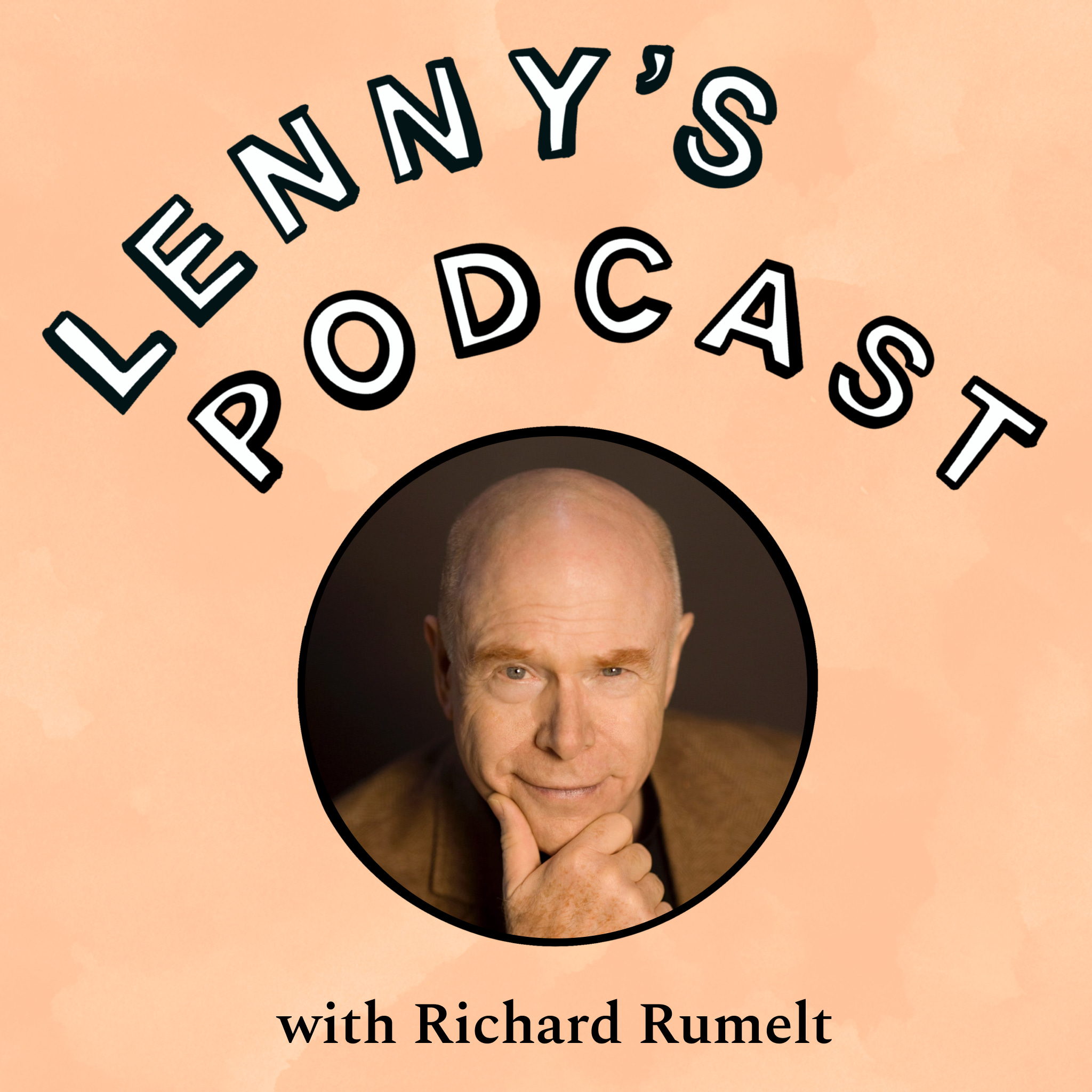
Richard Rumelt
Richard Rumelt is a legend in the world of strategy. From his early days teaching in Iran at a Harvard-sponsored business school to teaching at Harvard Business School itself to over four decades teaching at UCLA’s Anderson School of Management, Richard’s impact resonates globally. His strategic insights are sought after by major corporations including Microsoft, Shell, Apple, AT&T, Intel, and Commonwealth Bank and by governmental organizations such as the U.S. Army Special Operations Command.
Strategy & Positioning Skills
True strategy is not a vision or a list of goals, but a specific design for solving a high-stakes problem through diagnosis, policy, and action.
"Well, a strategy is a design for overcoming a high-stakes challenge. It's a mixture of policy and action designed to deal with a challenge."
Bad strategy often masquerades as a list of ambitious performance goals without identifying the actual obstacles or explaining how to overcome them.
"Bad strategy, the standard bad strategy for a corporation is a set of profit goals or performance goals. A set of goals. Goals are the engineering of how companies work to some extent. But abstract, h..."
Crafting strategy should be approached as creating an 'action agenda' focused on resolving the most critical addressable challenges.
"Don't call it strategy, call it an action agenda. It's huge numbers of people out there willing to sell you advice on mission and your vision and your values, all these things that have to be in place..."
In the tech sector, strategy requires shorter time horizons and a relentless focus on coherent action to adapt to a rapidly shifting reality.
"If you're making Almond Joy candy bars or something, you don't really change your strategy constantly. If you're in the tech business, of course you have a shorter time horizon. And then the coherence..."
To facilitate an effective strategy session, you must challenge participants to move past 'statements of value' to identify the specific barriers to success.
"So I was hired to do a foundry for a company and they said, 'Well, our diagnosis is not growing fast enough.' Okay, let's get into that because that's not a diagnosis, that's a statement. It's a state..."
A competitive advantage is often a 'discovered strength' that creates a surprise victory by exploiting an asymmetry between you and your challenger.
"And my point in writing about David and Goliath was that the surprise that David is able to beat this giant warrior, and that's a strategy story. Strategy story is about discovered strength."