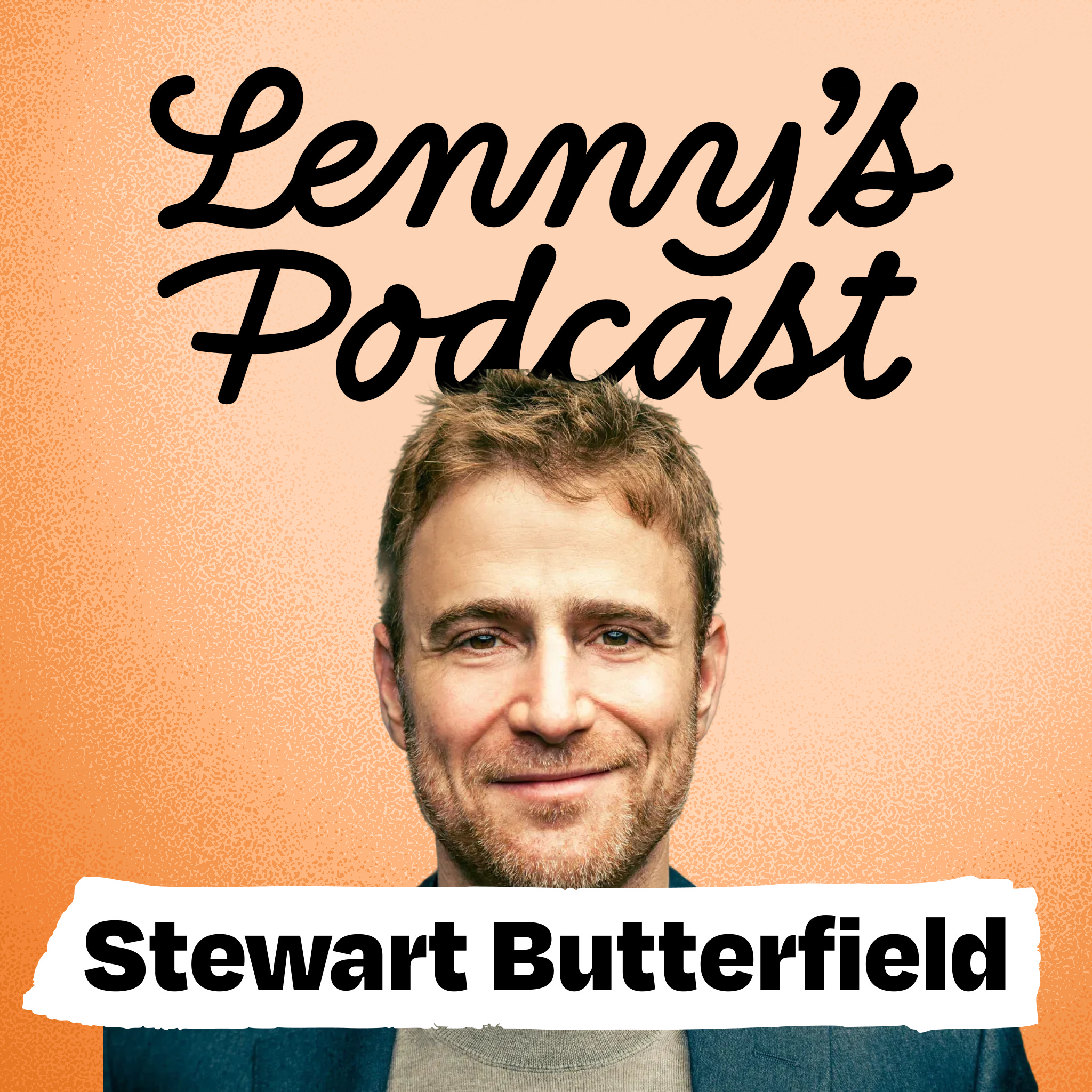
Stewart Butterfield
Stewart Butterfield is the co-founder of Slack and Flickr, two of the most influential products in internet history. After selling Slack to Salesforce in one of tech’s biggest acquisitions, he’s been focused on family, philanthropy, and creative projects. From “utility curves” to “the owner’s delusion” to “hyper-realistic work-like activities,” his thoughts on craft, strategy, and leadership apply to anyone building products or leading teams.
Communication Skills
When rolling out sensitive features, align stakeholders by providing advance notice and a tiered system of control and overrides.
"We told every Slack administrator that this was coming weeks before it came. And we told them that we were going to set a default for their organization... but also that they could override that defau..."
Hiring & Teams Skills
Align the entire organization around a customer-centric definition of success to ensure ethical behavior and long-term value creation.
"At more than one company all hands, I made everyone in the company repeat this as a chant. In the long run, the measure of our success will be the amount of value that we create for customers, and you..."
Use simple, relatable metaphors (like tilting an umbrella) to build a culture of empathy and consideration for the user's experience.
"It became a game like we were guessing is this person going to tilt their umbrella out of the way so we can pass or not? ... Tilt your umbrella was a very common saying on company swag and stuff like..."
Foster a culture where high standards and direct criticism are viewed as a shared commitment to excellence rather than personal attacks.
"If you can get to the point where like, 'Hey, we are trying to find improvements. We're trying to be critical because you're trying to make this as great as it can possibly be.' And not always, not wi..."
Leadership Skills
Avoid 'hyper-realistic work-like activities' where the organizational cost of analyzing and testing a minor change exceeds the potential value of the improvement.
"The difference that you could possibly achieve between having this feature and not having this feature is like this much... The cost of doing the analysis was this much. So it's guaranteed to be a los..."
Marketing Skills
Effective positioning involves framing a new product using familiar concepts to help users understand a category that doesn't yet exist.
"You're not just responsible for creating the product. You're responsible for, to a certain degree, creating the market. ... It's much easier to take a couple of existing ideas and put them together. S..."
Sell the aspirational outcome and the 'yearning' for the experience rather than the technical specifications of the tool.
"If you want to sell Harley-Davidson's... when you're selling the motorcycle, you're selling the open road and freedom and the wind in your hair. ... instead of trying to convince men to build a ship,..."
Product Management Skills
A strong product vision is driven by a state of 'divine discontent' and a refusal to accept current versions as 'good enough.'
"If you can't see almost limitless opportunities to improve, then you shouldn't be designing the product. ... I feel like what we have right now is just a giant piece of shit. It's just terrible and we..."
Use utility curves to determine if a feature has reached its 'magic threshold' of value or if it is suffering from diminishing returns.
"The idea is the first bit of effort you put into something doesn't result in a huge amount of value. And then there's some magic threshold where it produces an enormous amount of value and then contin..."
The core challenge of product design is often user comprehension and cognitive load rather than simply the number of steps in a process.
"If people could get over the idea of reducing friction as a number of goal or reducing the number of clicks or taps to do something, and instead focus on how can I make this simple? How do I prevent p..."
Unnecessary decision points in software create cognitive fatigue and negative emotional associations for the user.
"If your software stops me a second and asks me to make a decision and I don't really understand it, you make me feel stupid. ... if you're causing people to think, in the best case, it's unnecessary u..."
The guest provides a specific framework for when and how to pivot a company, emphasizing rational distance over emotional attachment.
"The decision is about have you exhausted the possibilities?"