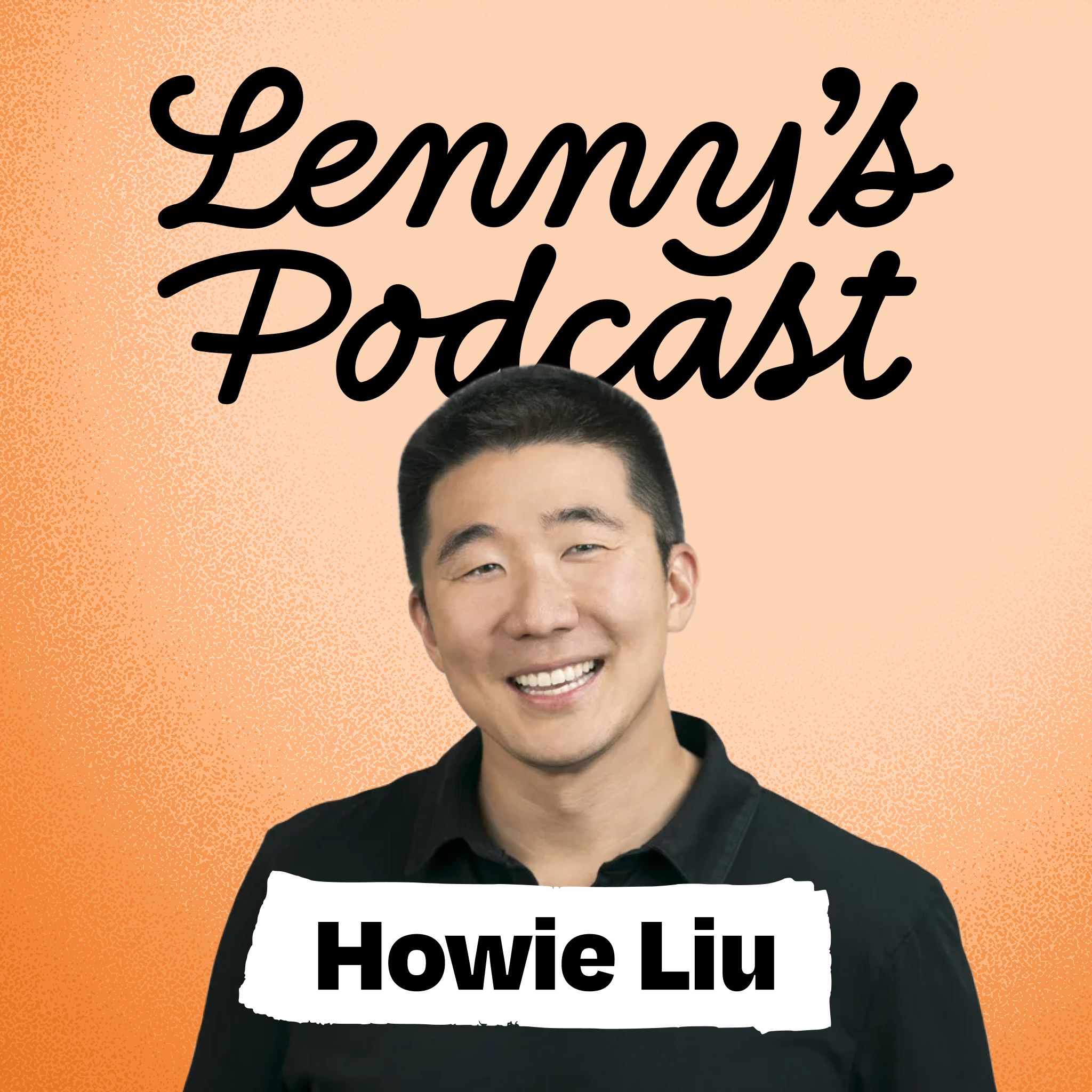
Howie Liu
Howie Liu is the co-founder and CEO of Airtable, the no-code platform valued at around $12 billion. After a viral tweet declared “Airtable is dead” based on incorrect data, Howie led a radical transformation: reorganizing the entire company around AI, becoming an “IC CEO” who codes daily, and achieving over $100 million in free cash flow.
AI & Technology Skills
Evaluate your product's mission through a clean-slate, AI-native lens to determine if existing assets are an advantage or a liability.
"How would you execute on that mission using a fully AI native approach? If you can't, then you should find a buyer and then if you really care about this mission, go and start the next carnation of it..."
To understand the AI solution space, leaders must personally experiment with underlying primitives and models rather than just reviewing final products.
"I think to really understand the solution space of what's possible, you have to be in the details. I mean, literally, you can't just look at screenshots or a pre-recorded video of a new product featur..."
Use 'vibes' and open-ended testing during the discovery phase of a novel AI product, and only transition to formal evals once the use cases converge.
"I think for a completely novel product experience or form factor, you should actually not start with evals and you should start with vibes, right? Meaning you need to go and just test in a much more o..."
Deeply understand emerging tech by creating personal 'weekend projects' that force you to use the tools beyond a superficial level.
"I try to use as many different AI products, including not Airtable, as I can... I try to invent little, almost like side projects of my own, to have a real reason to use these products."
Communication Skills
Shift from ritualistic standing meetings to urgency-driven meetings triggered by specific insights or 'alpha.'
"I want to make most meetings very timely and very informed by real alpha. There's got to be some kind of value and insight to seed that with."
Engineering Skills
Foster a culture where technical skills are seen as malleable and accessible to all roles, reducing the 'dark art' mystique of engineering.
"I really believe everyone could learn how to be a software engineer if they wanted to... Everyone can learn how to be a versatile kind of unicorn product engineer/designer hybrid in the AI-native era."
Hiring & Teams Skills
Structure teams based on the speed of execution required, separating rapid AI experimentation from deliberate infrastructure scaling.
"we now have these two separate parts of the company, and I actually think what's really cool is they actually compliment each other very well, right? Because the fast execution, the AI stuff, that cre..."
Give employees explicit permission and time to 'play' and experiment with new technology to build intuition.
"If you want to cancel all your meetings for like a day or for an entire week and just go play around with every AI product you think could be relevant to Airtable, go do it."
Leadership Skills
Move away from rigid weekly rituals toward high-quality, relationship-building catch-ups and urgency-driven topical meetings.
"I actually cut my one-on-one roster by default, and the idea is not that I don't want to spend time one-on-one with people, but rather that I found that the ... Just having more standing one-on-ones a..."
Collapse traditional role silos to create 'full-stack' operators who can drive outcomes with fewer dependencies.
"I just think that that concept of collapsing roles, everybody needs to become more full stack to do the ... being more outcome-oriented... I just think it's a new operating mentality overall for every..."
Product Management Skills
Avoid incrementalism by focusing on holistic, step-function leaps for the product rather than optimizing small surface areas in isolation.
"the best way to innovate on the product is not incrementally split over all these different little surface areas, but actually to have a bigger, more step function vision of how this product needs to..."
Use LLMs to aggressively process large volumes of qualitative data (like sales transcripts) to find strategic product and marketing insights.
"doing a lot of LLM calls against long transcripts of let's say, sales calls to extract different types of insights like here's the product apps, identify or here's summaries, et cetera."