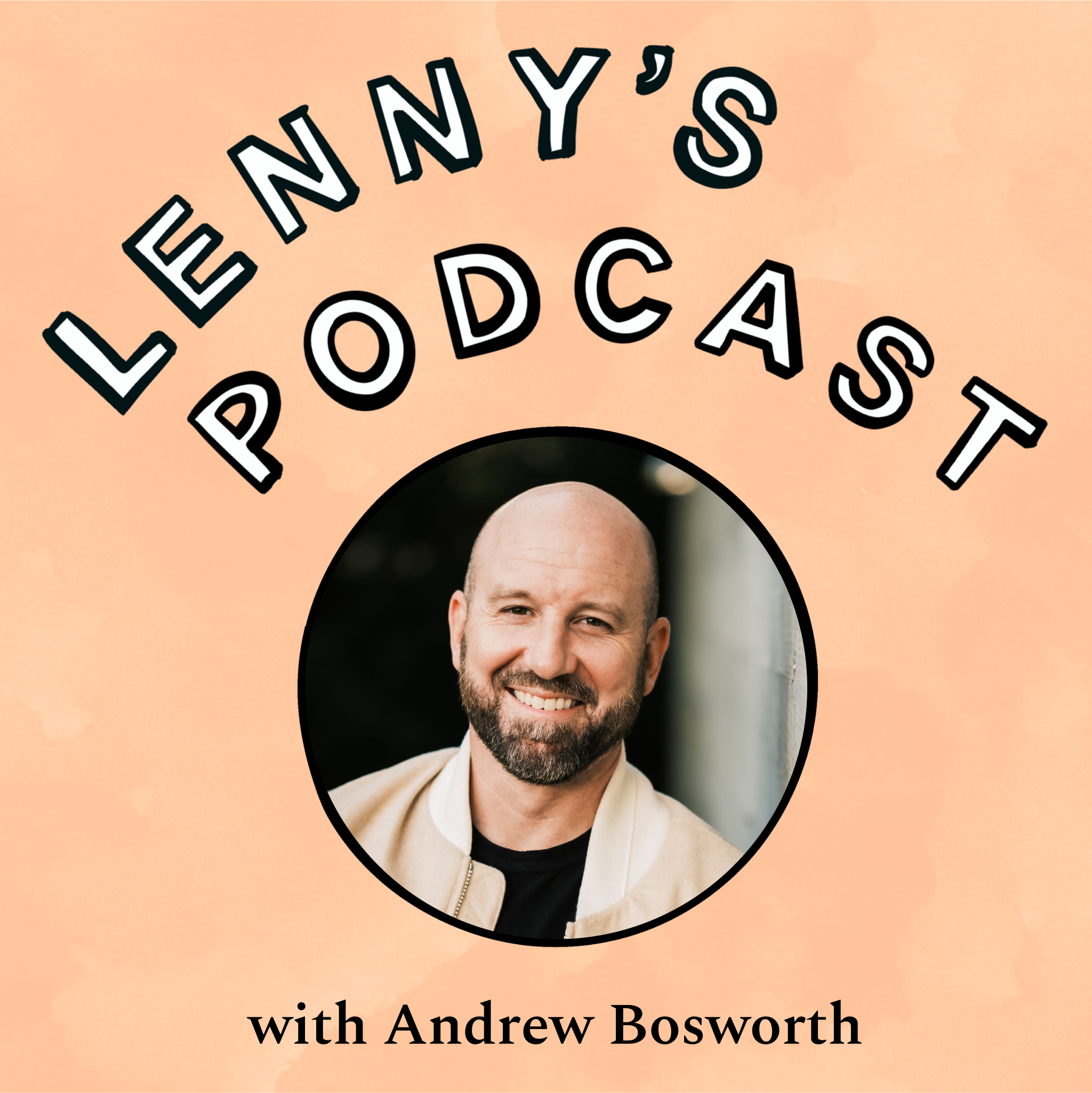
Boz

Andrew Bosworth—or Boz, as most people know him—is the chief technology officer at Meta and head of Reality Labs, the company’s augmented reality/virtual reality (AR/VR) organization, which he created in 2017. Boz joined Facebook in 2006 as their approximately 10th engineer, and in his 18-year tenure he built the original News Feed, Messenger, and Groups, as well as many early anti-abuse and infrastructure systems. At various times he has been the engineering director overseeing Events, Places, Photos, Videos, Timeline, Privacy, and more. Before Reality Labs, he ran the Ads and Business Platform product group, where he led engineering, product, research, analytics, and design, taking annual revenue from $4 billion to $40 billion in five years. Andrew currently leads Meta’s efforts in AR, VR, AI, and consumer hardware across Quest, Ray-Ban Meta glasses, and more.

9 skills 15 insights

Career Skills

Optimizing for learning and variety of experience early in a career creates a 'compound interest' effect that pays off in senior leadership.

"Jump into new things, give it six months. If it's not the thing, no problem. You just built a ton of new skills that's going to come in handy, I promise you that. Keep going."
40:50

Strategic career growth comes from either owning a critical but neglected 'dam' or being in the 'forge' of the company's top priority.

"I think there's two really good places to be. I think one is carrying a lot of water in areas that the company's not paying attention to but you are important... The second-best place to be, or maybe..."
42:12

Communication Skills

Leadership is fundamentally a communication task; if your ideas don't break through or aren't understood, you haven't done the job.

"Communication is the job... it is exclusively done through the creation of artifacts or verbalizations that affect other humans. That is all there is."
51:40

Using multiple channels and repeating key messages ensures that information is absorbed by diverse audiences.

"One is multimodality... I will give an all-hands and then write a post with the content of the all-hands, because different people are going to respond differently to these modalities."
56:46

During downturns, alignment requires a clear defense of long-term 'future' investments to prevent a retreat into only shoring up the core business.

"We really did not communicate effectively, I think, with the market around our future investments... we had to tell the company, 'You don't want to work at a company that, when times are tough, kills..."
01:15:15

Hiring & Teams Skills

Interviewing should focus on a candidate's self-awareness and how their 'superpowers' align with the team's needs.

"One of the most important things that I always ask people is what people who've worked with them would say are their greatest strengths and weaknesses."
01:32:25

Radical transparency maximizes the potential of high-talent employees by giving them the context needed to act creatively and autonomously.

"Creating this really open information ecosystem is one of the ways that we do that... anytime they have the wrong information, or they don't have the information, you've now blocked one of the economi..."
23:05

Leadership Skills

Kindness in feedback is about being productive and helpful, whereas 'niceness' is often just avoiding the discomfort of truth.

"Being kind isn't that. Being kind is like, 'Hey, how can I deliver this feedback in a way that is actually productive and helpful, in a way that is going to help them and not cause them just to feel b..."
50:50

Approaching profound disagreements with genuine curiosity rather than defensiveness can de-escalate conflict and lead to better outcomes.

"She could have the most profound disagreement with somebody in the world... and she would respond. She would say, 'Fascinating. You have to tell me more about why you think that.'"
01:27:38

Effective delegation involves intentionally stepping back when the team is struggling with the 'right' problems to build their autonomy.

"One of the most powerful things we do is refuse to rule. Someone will bring me a thing. A lot of times we feel obligated to weigh in and help. I'll be like, 'Nope, but look, I think you've got it. I t..."
15:09

Leaders should oscillate between high-level strategy and deep-detail involvement based on the criticality of the project.

"Mark, we joke inside of Meta, to this day, we call it the eye of Sauron. When Mark has determined that the thing that you're working on is the most important thing, there is no detail too small for hi..."
31:17

Your primary job is to achieve results, and your manager is a resource with tools and authority that can clear paths and accelerate your work.

"The advice I find I have to give more frequently than any other in my career, as a manager, a board member, an advisor and a friend, is for people to more directly leverage their leaders."
13:40

A structured, consistent update format helps leaders quickly digest status, team health, and personal sentiment.

"We actually used to have a format for that we called HPMs. Highlight, people, me. And every manager at Facebook from like 2008 to like 2014 would send to their manager, or even their leadership group."
20:02

When managing highly effective leaders, provide feedback and allow them time to 're-compile' their worldview with the new data.

"Mark's voracious for all information and all points of view... you'll give him feedback, he listens... over the course of the next week or two, you'll just see shifts."
45:08

Product Management Skills

True competitive analysis involves reverse-engineering a competitor's internal trade-offs and strategic constraints by using their product.

"I can tell you from using it what instructions they were given, that team was given. I can tell you what they were optimizing for. I can tell you what constraints they were under."
01:09:39