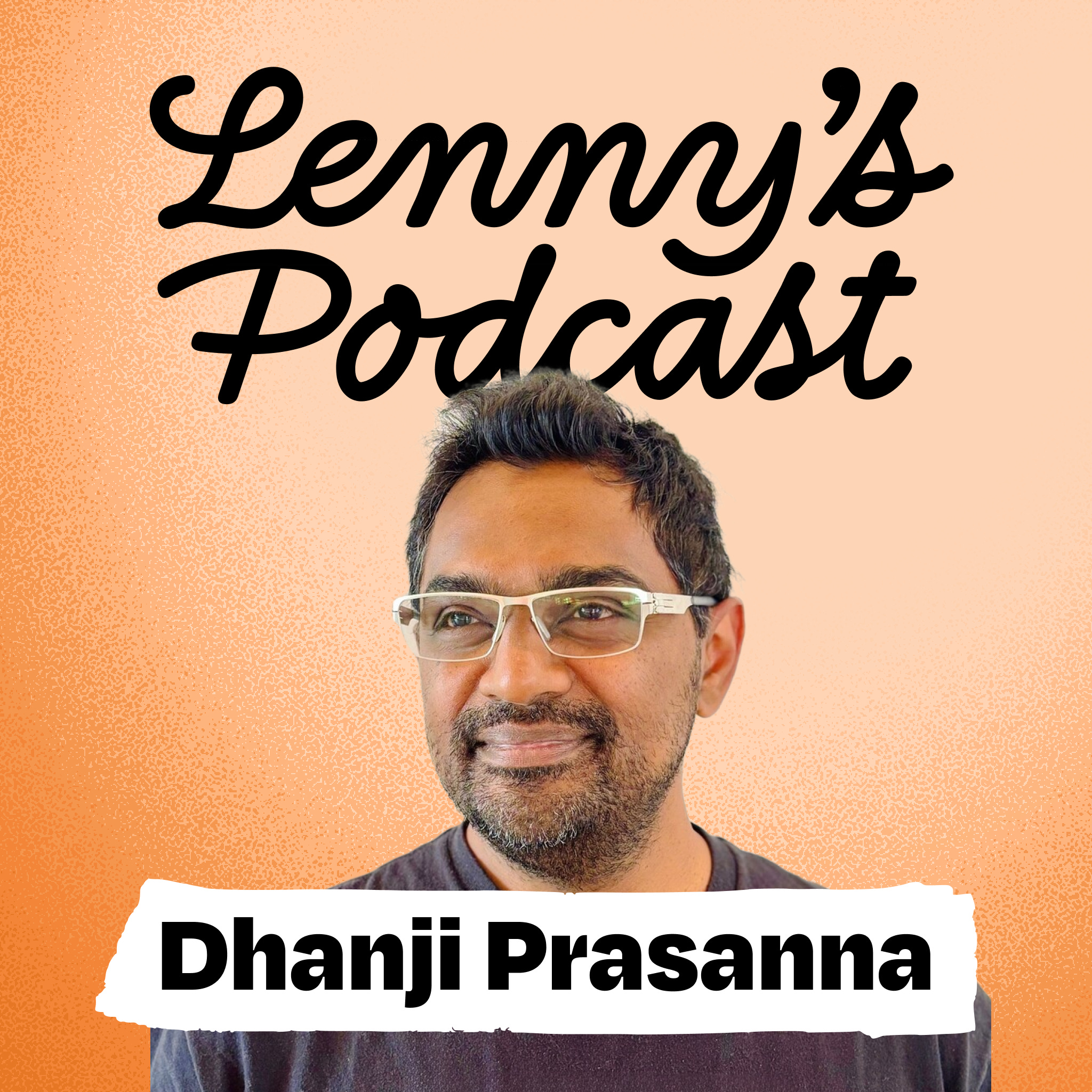
Dhanji R. Prasanna

Dhanji R. Prasanna is the chief technology officer at Block (formerly Square), where he’s managed more than 4,000 engineers over the past two years. Under his leadership, Block has become one of the most AI-native large companies in the world. Before becoming CTO, Dhanji wrote an “AI manifesto” to CEO Jack Dorsey that sparked a company-wide transformation (and his promotion to CTO).

8 skills 13 insights

AI & Technology Skills

Treat internal automation via AI as a top-level company priority to drive massive productivity gains.

"Our number one priority is through automate Block, which means getting AI and getting AI forms of automation through our entire company. ... we find engineering teams that are very, very AI forward th..."
15:46

AI strategy must be fluid because the capabilities of the underlying models are evolving rapidly.

"The truth is the value is changing every day. And so you need to be adaptable and look at what the value is today and plan for what the value will be tomorrow and then slowly expand to the areas where..."
17:17

Use standardized protocols like MCP to allow LLMs to interact with internal enterprise tools (Salesforce, Snowflake, SQL).

"Goose is a general purpose AI agent. ... the way we've been able to do this is through something called a model context protocol or the MCP... the model context protocol is very simply just a set of f..."
21:49

AI enables a shift from incremental refactoring to complete, automated rewrites of software based on specifications.

"What would our world look like if every single release, RM minus RF deleted the entire app and rebuilt it from scratch? ... I think that the trick is getting the AI to respect all of those incremental..."
35:00

Avoid the trap of building internal tools just because AI makes it easy; focus technical bandwidth on core competencies.

"The savings and costs that there might be in replacing a vendor tool by something you build in-house is probably not worth it in the mental bandwidth that you've lost and the amount of the team's tech..."
40:31

Leaders must personally use and experiment with new technology to understand its ergonomics and potential organizational impact.

"I would say really try and use these tools yourself. ... we learn a lot about how our own workflow can change, and that's going to tell you so much more about how are you going to change your organiza..."
54:04

Contributing to open protocols (like MCP) and open-sourcing internal tools (like Goose) builds a more robust ecosystem and attracts partners.

"We believe in the power of open source and one of our core missions is to increase openness, and that means contributing to open protocols and contributing to open source. ... We want to build things..."
27:23

Engineering Skills

Organizational structure directly dictates the architecture and quality of the products being built.

"I learned the most throughout this process is that Conway's Law can be really, really powerful. So it's the law that basically says you ship your org structure. So what you're organized as in terms of..."
12:13

Product success is driven by solving user problems, not by the underlying architectural elegance or code quality.

"A lot of engineers think that code quality is important to building a successful product. The two have nothing to do with each other. ... It really has very little to do with how well it was architect..."
01:02:02

Hiring & Teams Skills

Modern interview loops should incorporate AI tools to reflect how work is actually performed.

"We're starting to do that now. So traditionally we would just use CoderPad or something like that to wipe boards or a problem... But now we're looking at can you use Vibe code to build something? How..."
47:33

Prioritize a 'learning mindset' and openness to AI over specific legacy technical skills.

"We're very much looking for people that are embracing these tools and that are eager to try and learn from it. ... I'm much more keen on looking for that college grad who just really is eager to learn..."
46:14

Shift the company's identity from a service-oriented firm to a technology-first organization to align with industry direction.

"At the start, my main focus was to get block to think like a technology company. And for a long time we had had a little bit of, I'm going to call it identity drift, maybe. We were talking about ourse..."
07:53

Moving from a General Manager (GM) structure to a functional structure enables deeper technical focus and cross-company alignment.

"We changed the organization. So all engineers report into one single team now, all designers report into one single team and there's single head of engineering, single head of design, et cetera. And s..."
10:32